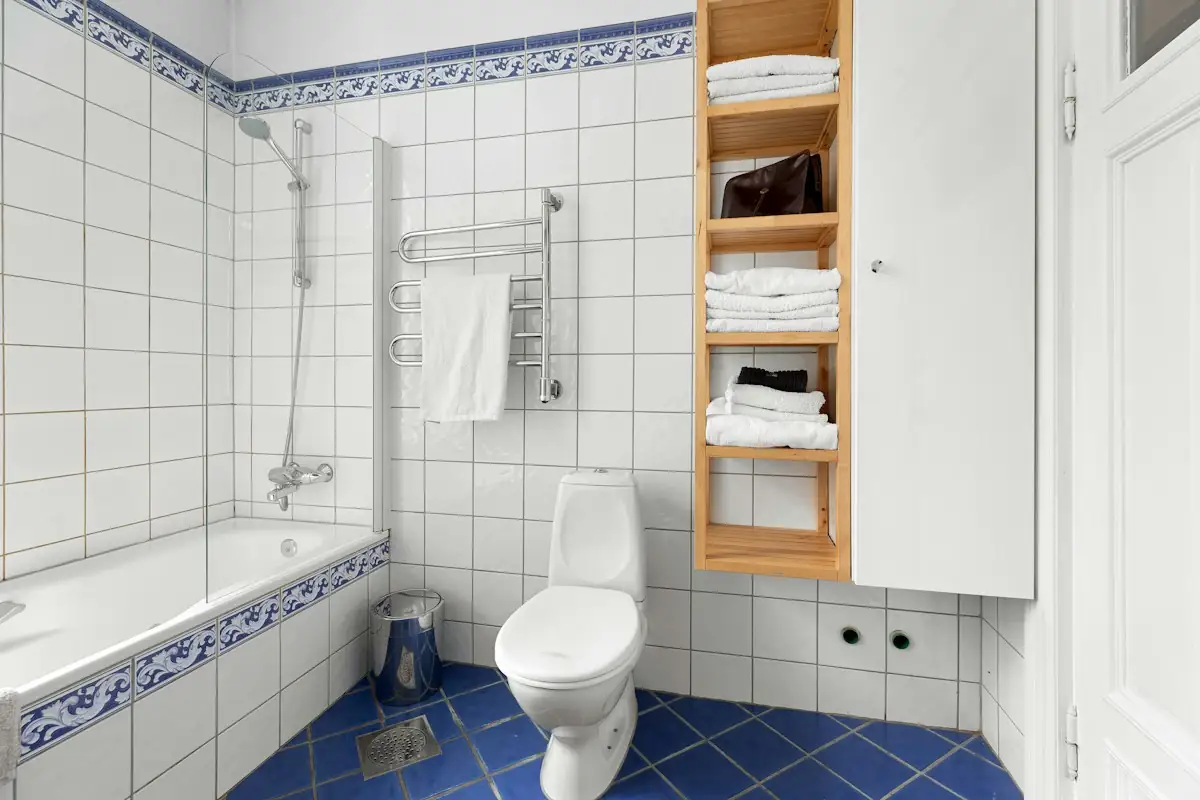
Housing and plumbing
These streets were developed from the 1960s through the 1980s with side-splits, backsplits and two-storeys. Many have had kitchens and bathrooms renovated more than once, but the drains under the slab, the stack and the main shut-off are often original. Copper supply can be developing pinholes, and some laterals are clay or cast iron.
Common work
- Main drain clogs from roots or scale
- Gate valves that will not close
- Copper pinhole leaks
- Toilet flanges on older floors
- Shower valves without pressure balancing
Older split-levels
Split-level homes have plumbing on several floors, with drains that cross through half-levels. Leaks can travel along joists and appear far from their source. Our leak detection approach starts with a meter test and narrows down from there.
Planning a renovation here? Have the drain camera-inspected first. New tile over an old failing drain is a costly combination.
Typical services
Calls include camera inspections, main valve replacements and shower valve upgrades.
Original cast-iron stacks
Many homes on these streets still have their original cast-iron soil stack running from the upper bathroom to the basement floor. Cast iron is quiet and long-lived, but after decades the hub joints can weep, and horizontal sections under the slab can scale up and rot along the bottom. A rusty stain on the stack near the floor or a sewage smell in a basement closet is a reason to look. We can replace a failing section with ABS using approved transition couplings rather than tearing out the whole stack.
Kitchens moved during renovation
Where kitchens were relocated in a renovation, check that the new sink drain has a proper vent. Gurgling and slow drainage after a remodel often trace back to an air admittance valve that has failed or was never installed correctly.
Our basement walk-through in Crestwood–Springfarm–Yorkhill
- Main shut-off. We find it, turn it, and tell you if the wheel handle or ball valve still seals.
- Water heater. Read the date off the rating plate, look for rust at the fittings and test the relief valve.
- Floor drain and cleanout. Check the trap holds water and the cleanout cap comes off.
- Sump pit. Fill-test the pump and see where the discharge lands outside.
- Exposed supply. Note copper, PEX, poly-B or galvanized, and any green or white crust at the joints.